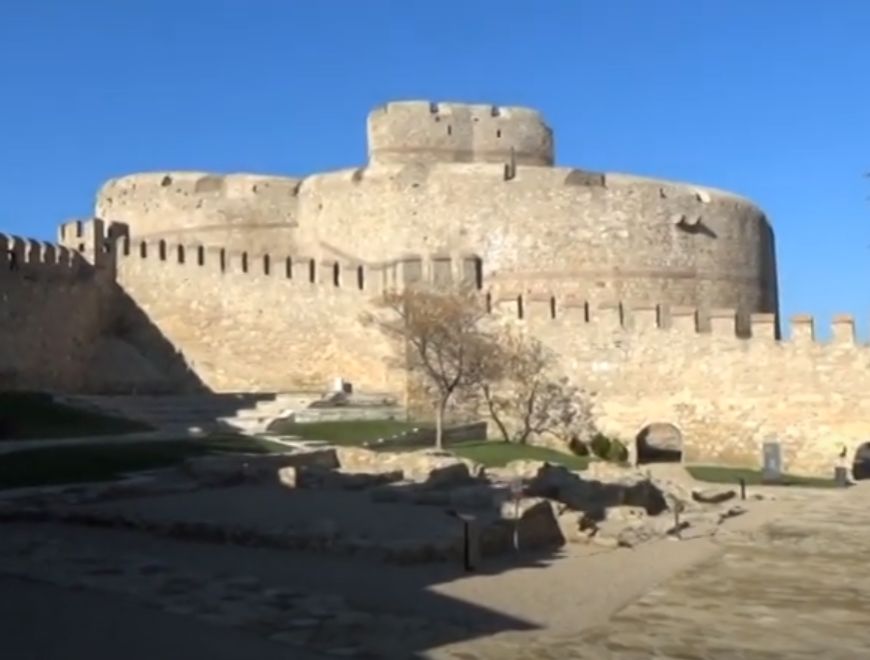
There are two ferry crossings from Canakkale to the opposite side of the Dardenelles. You are effectively crossing from the Asian side to the European continent by either taking the ferry to to the town of Eceabat or to Kilitbahir. In this video we take a look at Kilitbahir Castle, located by the village of Kilitbahir which gets its name from the Turkish Kilit-ül-bahr, meaning the Key of the Sea. The impressive castle here can be seen from the Canakkale side and is impossible to miss if you take the Kilitbahir ferry and the short walk from the ferry terminal.
When you arrive on the Kilitbahir side you will find several fish restaurants and a small fishing harbour. It is easy to forget that there is also an old village that surrounds the castle and a particularly good cafe called Kale Cafe just behind the castle walls. The beautifully renovated house by the cafe is also the local centre for Culture and Arts and contains displays of relics from the First World War as well as ethnograqphic exhibits from around Kilitbahir.
Kilitbahir Castle was built to control the shipping of the Dardenelles. The castle fortress faces another fortification just over the water in Canakkale which is called Kale-i Sultaniye or by its modern name Çimenlik Castle from which Canakkale gets its name. Both castles were built by Fatih Sultan Mehmet also referred to as Mehmed II and commonly known as Mehmed the Conqueror. The castle was build in 1463 at the narrowest point on the straits. Visitors coming from Eceabat or from the ferry will pass through the impressive stone gate tower and on to the castle entrance. There is plenty of parking for cars and coaches. The impressive citadel with its central clover shapped tower dominates the castle grounds.
It is the clover leaf shape that makes Kilitbahir Castle unusual. The plans were drawn up by overlapping three circles partially which many have said was done to symbolise the shape of a key and its name. The walls are not straight but are arched as if drawn with a compass and give the castle its unique shape. The seven story tower which is now an exhibition was built during the reign of Sultan Suleiman the Magnificent or Suleiman I. This tall vantage point has a commanding view of the Dardenelles. The castle would have been well armed with a full garrison of Ottoman troops. This heart shaped tower in the centre of the inner fortress is a magnificent piece of architecture. Visitors can scale the staircases of the outer walls and walk around these impressive fortifications.
When we came here some 8 years ago it was basically a shell with not much to see apart from the basic structure. It is quite a different story today. Having been expertly and painstakingly renovated it provides an interesting insight into Ottoman history. The Sarikule Müzesi or museum by the main entrance is a showcase for relics of the battle of the Gallipoli campaign. Kilitbahir Castle was repaired and expanded during the dynasty of Sultan Suleiman and the Sari Kule was built in 1541.
The grounds of the castle feature several statues and have been carefully restored with extensive grass lawns which make it all the more impressive. There is a small section dedicated to Piri Reis or Ahmed Muhiddin Piri, an Ottoman admiral, navigator, geographer and cartographer who was born in 1470. There is also a documentary film which informs you about the castles history.
Çanakkale’den, Çanakkale Boğazı’nın karşı yakasına geçen iki feribot hattı bulunmaktadır. Aslında bu yolculuk, Asya kıtasından Avrupa kıtasına bir geçiştir ve bu geçişi ya Eceabat ya da Kilitbahir kasabasına giden feribotlarla yapabilirsiniz. Bu videoda, Kilitbahir Köyü yanında yer alan Kilitbahir Kalesi’ne göz atıyoruz. Köyün ismi, Türkçede “denizin kilidi” anlamına gelen Kilit-ül-Bahr ifadesinden gelmektedir. Çanakkale kıyısından rahatlıkla görülebilen bu etkileyici kale, Kilitbahir feribotunu kullanırsanız ve terminalden kısa bir yürüyüş yaparsanız gözünüzden kaçması imkânsızdır.
Kilitbahir tarafına vardığınızda, birkaç balık restoranı ve küçük bir balıkçı barınağı sizi karşılar. Ancak, kaleyi çevreleyen eski köy dokusu ve kale duvarlarının hemen arkasında yer alan oldukça güzel bir kafe olan Kale Kafeyi görmek de unutulmamalı. Kafenin yanındaki özenle restore edilmiş tarihi bina, aynı zamanda yerel Kültür ve Sanat Merkezi olarak hizmet vermekte olup, Birinci Dünya Savaşı’na ait kalıntılar ile Kilitbahir yöresine ait etnografik eserlerin sergilendiği bir sergi alanıdır.
Kilitbahir Kalesi, boğazdan geçen deniz trafiğini kontrol etmek amacıyla inşa edilmiştir. Kale, denizin hemen karşısındaki Çimenlik Kalesi (eski adıyla Kale-i Sultaniye) ile karşılıklı konumlanmıştır. Bu iki kale de, Fatih Sultan Mehmet (II. Mehmed) tarafından yaptırılmıştır. Kilitbahir Kalesi, boğazın en dar noktasında, 1463 yılında inşa edilmiştir. Eceabat’tan gelen ya da feribotla ulaşan ziyaretçiler, kaleye görkemli taş kapı kulesinden geçerek giriş yaparlar. Otomobil ve otobüsler için geniş otopark alanı da mevcuttur. Kalede yer alan yonca yaprağı şeklindeki iç kule, yapının en dikkat çekici mimari unsurudur.
Kilitbahir Kalesi’ni benzersiz kılan da bu yonca şeklidir. Üç dairenin birbirine kısmen üst üste bindirilerek oluşturulduğu bu planın, kalenin adına atıfla bir anahtarın şekline benzetildiği de söylenmektedir. Kale duvarları düz değil, pergellerle çizilmiş gibi yay şeklindedir ve bu da kaleye kendine özgü bir görünüm kazandırır. Kale içindeki yedi katlı kule, Kanuni Sultan Süleyman (I. Süleyman) döneminde inşa edilmiştir. Bu yüksek kule, boğaz üzerinde hâkim bir bakış açısına sahiptir. Kale, döneminde tam teşekküllü bir Osmanlı garnizonuna ev sahipliği yapmıştır. Kalbin şeklini andıran bu iç kule, mimari açıdan oldukça etkileyicidir. Ziyaretçiler, dış surlara çıkan merdivenleri tırmanarak bu etkileyici savunma yapılarında yürüyebilirler.
Yaklaşık 8 yıl önce buraya ilk geldiğimizde, kale neredeyse bir yapı kabuğundan ibaretti ve görülecek çok az şey vardı. Ancak bugün durum oldukça farklı. Titizlikle ve büyük özenle restore edilen kale, Osmanlı tarihine dair ilginç bir bakış sunuyor. Ana giriş kapısındaki Sarı Kule Müzesi, Çanakkale Savaşı’na ait kalıntıların sergilendiği bir alan olarak öne çıkıyor. Kale, Kanuni Sultan Süleyman döneminde onarılmış ve Sarı Kule 1541 yılında inşa edilmiştir.
Kale arazisi içinde çeşitli heykeller yer almakta ve geniş çim alanlarla özenle düzenlenmiş bir çevre sunmaktadır. Kalede ayrıca, 1470 doğumlu ünlü Osmanlı amirali, denizci, haritacı ve coğrafyacı olan Piri Reis (Ahmed Muhiddin Piri) için ayrılmış küçük bir bölüm bulunmaktadır. Ayrıca, kalenin tarihini anlatan belgesel bir film de ziyaretçilere sunulmaktadır.



Leave a Reply